What are the best real world applications developed with Haskell?
Haskell is utilized in several high-profile tools and industries where correctness and performance are critical:
: Haskell is non-strict, meaning it defers computations until their results are actually needed. In a "real-world" context, this allows for modularity but requires careful profiling and optimization to avoid memory leaks. Notable Real-World Applications
is both a seminal textbook by Bryan O’Sullivan, John Goerzen, and Don Stewart and a philosophy for using the Haskell programming language to solve practical, production-level problems. While many tutorials focus on the abstract mathematical roots of functional programming, this approach emphasizes building reliable software that interacts with the "outside world" through I/O, databases, and networking. Core Concepts of Practical Haskell
: Haskell makes a strict distinction between "pure" code—functions that always return the same output for the same input—and code that performs side effects (like writing to a file). This separation, managed via the IO Monad , makes programs easier to test and reason about.
: The type system is used to enforce program specifications at compile time. Features like Typeclasses (which inspired Rust's traits) and GADTs help prevent common runtime errors.
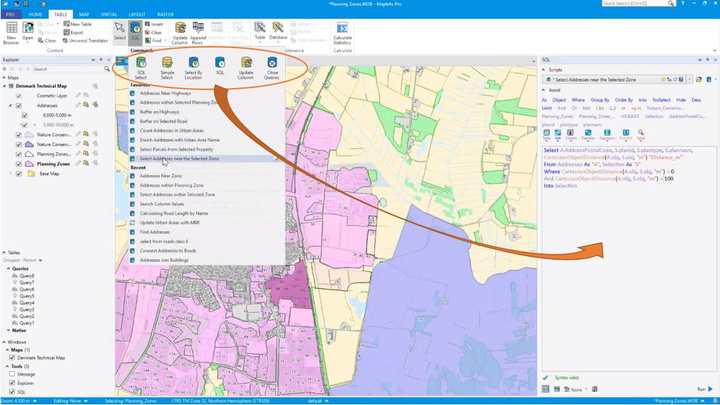
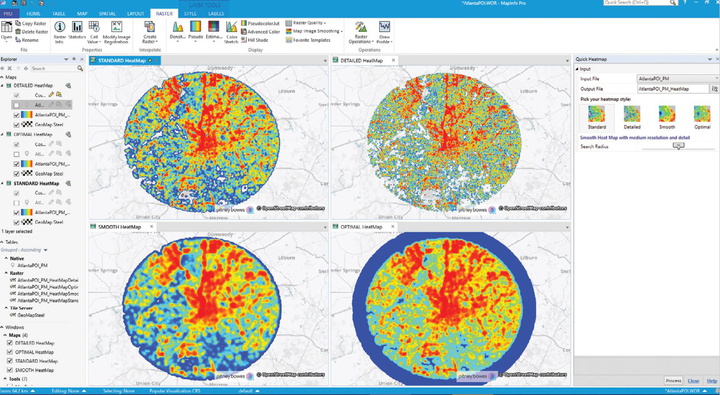
Turn your data into insights using the new heat mapping available within MapInfo Pro Real World Haskell
Start with any file of people, places, or things and visualize the density of the locations as “hot spots” that help you make better decisions. For more power, upgrade to MapInfo® Pro Advanced and work with all kinds of raster data using the fast, highly compressed MRR format.
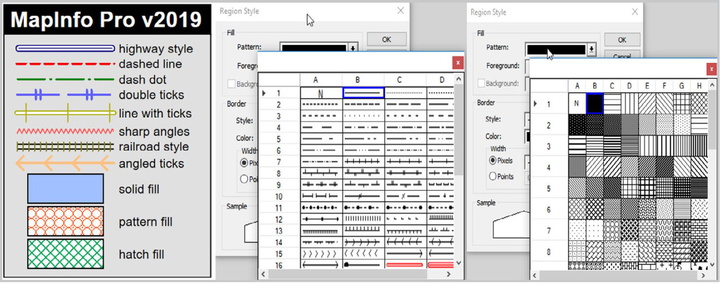
Make beautiful maps with layout improvements What are the best real world applications developed
Experience crisp line and fill styles, vectorized legends, faster redraws, snapping and alignment, templates, multipage layouts and improved output quality.
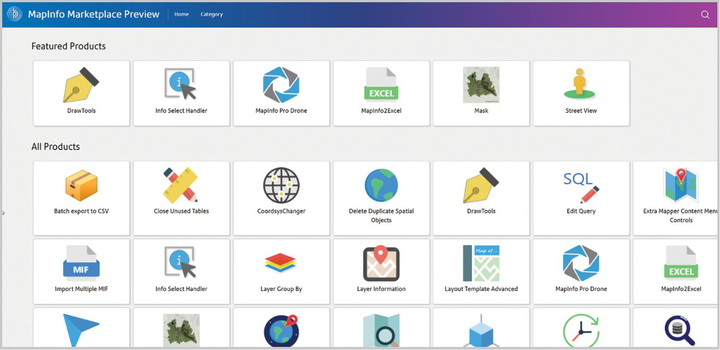
Enhance your location analytics with customized apps in the Marketplace Notable Real-World Applications is both a seminal textbook
Customized apps are released and updated continuously to help you solve your specific business needs.
Need imagery of a specific area? MapInfo® Pro Drone is available. Looking for additional special purpose tools? We have an app for that, too.
Knowledge Community connects everyone with specialists across Pitney Bowes organization to encourage the exchange of ideas, information and to ask product-related questions.
Knowledge CommunityUseful add-on applications for MapInfo Pro that you can download and install for your license.
ToolsWhat are the best real world applications developed with Haskell?
Haskell is utilized in several high-profile tools and industries where correctness and performance are critical:
: Haskell is non-strict, meaning it defers computations until their results are actually needed. In a "real-world" context, this allows for modularity but requires careful profiling and optimization to avoid memory leaks. Notable Real-World Applications
is both a seminal textbook by Bryan O’Sullivan, John Goerzen, and Don Stewart and a philosophy for using the Haskell programming language to solve practical, production-level problems. While many tutorials focus on the abstract mathematical roots of functional programming, this approach emphasizes building reliable software that interacts with the "outside world" through I/O, databases, and networking. Core Concepts of Practical Haskell
: Haskell makes a strict distinction between "pure" code—functions that always return the same output for the same input—and code that performs side effects (like writing to a file). This separation, managed via the IO Monad , makes programs easier to test and reason about.
: The type system is used to enforce program specifications at compile time. Features like Typeclasses (which inspired Rust's traits) and GADTs help prevent common runtime errors.