Basics


Info Download

Advanced

v/v
V
V

Plot Download

: Despite their foundational role, transgender people—especially Black, Indigenous, and People of Color (BIPOC)—have historically been marginalized even within the queer movement, with many early successes primarily benefiting white, cisgender members.

The transgender community is a diverse group within the broader LGBTQ culture, encompassing individuals whose gender identity differs from the sex they were assigned at birth. While the community has gained significant visibility in recent years, it continues to face a complex landscape of social progress, systemic discrimination, and internal cultural shifts.

: The 1966 Compton’s Cafeteria Riot in San Francisco and the 1969 Stonewall Uprising in New York were sparked by transgender women and drag queens resisting police harassment.

: The term "transgender" has evolved as an umbrella term that includes nonbinary, genderqueer, and agender identities. Social Challenges and Disparities

Increased representation in media and politics has created a "double-edged sword" effect for the community. Understanding the Transgender Community - HRC

: Approximately 29% of trans adults live in poverty, with rates nearly doubling for Black (39%) and Latine (48%) trans adults.

: Many trans individuals face "medical gaslighting" or refusal of care. In some surveys, 1 in 3 reported having to teach their own doctors about transgender-specific healthcare. The Dichotomy of Visibility

The transgender community faces disproportionate challenges compared to both the general population and cisgender LGBTQ individuals.
Disclaimer: This tool is provided for educational and illustrative purposes only. No guarantee is made regarding accuracy, suitability, or performance. Use at your own risk. - Copyright: ufelectronics.eu / Andreas Dyhrberg

×
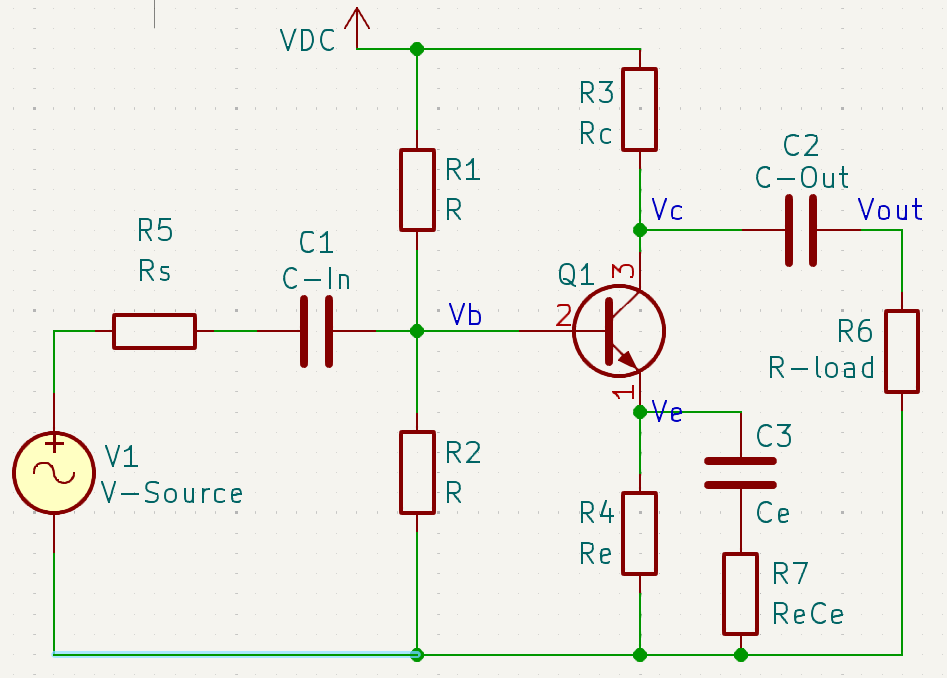
Amplifier Schematic
×

There are different ways to calculate an amplifier, depending on what you want to achieve.

Maybe you want to achieve a certain gain, as far as possible (classic mode). Or you have a low Vcc to respect (modern mode). Or you work with analog audio amps (symmetry mode).

Depending on what you want to achieve and the way of calculating it. Some fields might become dependent on others, or the other way around.

Your above choise makes some input fields available for manipulation, while hiding others.


🎯 1. Target Gain (Av) — "Classic mode" prissy sissyboy shemale

You care about how much your amplifier multiplies the input signal.

Set desired voltage gain and Rc voltage drop. Best for learning and simple amplifiers.

You say: “I want a gain of 10.”
The app adjusts resistors to try and match that.
You must give Av and Vrc (the voltage dropped across Rc).

Best for common emitter amplifiers.

✅ Default choice for most beginners and educational use. : The 1966 Compton’s Cafeteria Riot in San


⚡ 2. Target Emitter Voltage (Ve) — "Modern mode"

You care about setting a healthy DC bias point.

Prioritize stable biasing via Ve. Useful for low-voltage circuits or precision designs.

You say: “I want Ve = 0.5 V, to keep the transistor out of trouble.”
This makes sure your transistor stays in active mode.
Gain becomes whatever it turns out to be.

Ideal for common emitter amplifiers when the goal is to ensure proper biasing for low-voltage or precision circuits, and it’s also used in class AB amplifiers to prevent distortion : Despite their foundational role

✅ Useful in low-voltage designs (e.g., 3.3V systems).


🧭 3. Target Collector Voltage (Vc) — "Symmetry mode"

You want to place the collector in the middle of the power rail.

Target Vc = Vcc/2 for maximum signal swing. Great for audio and analog signals.

You say: “Make Vc = Vcc/2” for maximum swing.
Useful for analog audio amps or symmetrical headroom.
Gain and Ve are outcomes.

Best for common collector amplifiers and class AB amplifiers.

✅ Best for signal integrity.

Prissy Sissyboy Shemale Info

: Despite their foundational role, transgender people—especially Black, Indigenous, and People of Color (BIPOC)—have historically been marginalized even within the queer movement, with many early successes primarily benefiting white, cisgender members.

The transgender community is a diverse group within the broader LGBTQ culture, encompassing individuals whose gender identity differs from the sex they were assigned at birth. While the community has gained significant visibility in recent years, it continues to face a complex landscape of social progress, systemic discrimination, and internal cultural shifts.

: The 1966 Compton’s Cafeteria Riot in San Francisco and the 1969 Stonewall Uprising in New York were sparked by transgender women and drag queens resisting police harassment.

: The term "transgender" has evolved as an umbrella term that includes nonbinary, genderqueer, and agender identities. Social Challenges and Disparities

Increased representation in media and politics has created a "double-edged sword" effect for the community. Understanding the Transgender Community - HRC

: Approximately 29% of trans adults live in poverty, with rates nearly doubling for Black (39%) and Latine (48%) trans adults.

: Many trans individuals face "medical gaslighting" or refusal of care. In some surveys, 1 in 3 reported having to teach their own doctors about transgender-specific healthcare. The Dichotomy of Visibility

The transgender community faces disproportionate challenges compared to both the general population and cisgender LGBTQ individuals.