The Journey of Music That Never Ends.
The Journey of Music That Never Ends.
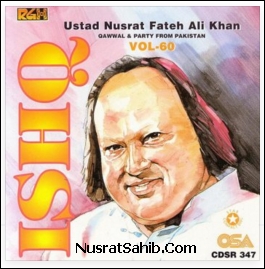
Ae Athra Ishq Nahi Saun Denda
Ishq Vol.60 & 94
Punjabi-Qawwali
Nusrat Fateh Ali Khan
Downloads : 360 times
Studies using high-dimensional flow cytometry and single-cell sequencing show that "healthy" ranges are broader than traditionally thought:
The most potent intrinsic driver, causing a shift from precursor-biased (naïve) status to an inflammation-biased status.
Heritability plays a more pronounced role in T cell populations compared to B cells , which are more susceptible to environmental cues. Specific genetic variants (ccQTLs) have been identified that regulate leukocyte counts and contribute to disease susceptibility. Expected Variation in Healthy Adults
The human "immunotype" is shaped by a complex interplay of heritable and non-heritable factors: